Global Japanese Sushi Rolls
Highlighted under: Italian Dish
I absolutely love making sushi rolls at home! There’s something incredibly satisfying about combining fresh ingredients to create beautiful and delicious rolls. I find the process of rolling them up both therapeutic and rewarding, especially when I can customize the fillings to suit my cravings. After some trial and error, I’ve perfected a method that ensures my sushi rolls maintain their shape and taste vibrant. This recipe is perfect for casual dinners or entertaining friends, and I can’t wait to share my favorite combination with you!

When I first attempted to make sushi at home, I was overwhelmed by the thought of rolling it perfectly. But after practicing a few times, I discovered that the secret lies in the consistency of the rice and the way you use the bamboo mat. I've tried various combos, from traditional fish to vegetarian delights, and I must say, the flavor explosion is always worth the effort!
One of my favorite tips is to slightly wet your hands while handling the sushi rice. This prevents the rice from sticking and allows for a neat and clean roll. Don't hesitate to experiment with different ingredients—sushi making is all about creativity and personal taste!
Reasons to Love Global Japanese Sushi Rolls
- Fresh ingredients rolled into a delightful bite-sized package
- Endless customization options for every palate
- Perfect for sharing at parties or enjoying on a cozy night in
The Art of Sushi Rice
Sushi rice is the foundation of any great sushi roll, and getting it right is crucial for the perfect texture and flavor. Rinsing the rice thoroughly washes away excess starch, which helps achieve that desirable stickiness when cooked. After cooking, allow the rice to steam for a few minutes with the lid on to finish the cooking process and enhance its fluffiness. You'll know it's ready when the grains are tender yet firm, and you can easily shape it without being overly mushy.
Mixing in rice vinegar, sugar, and salt is where the magic happens. The vinegar not only adds flavor but also helps preserve the sushi. Make sure to mix it in while the rice is still warm to help it absorb the flavors fully. As you fold the rice gently, avoid mashing it to keep the grains intact. This step is essential for achieving that restaurant-quality sushi experience at home.
Fillings and Flavor Combinations
The ingredients you choose for sushi rolls can dramatically affect the overall taste and texture of your meal. For the freshest flavors, select sushi-grade fish, ensuring it’s from a reputable source. Experimenting with various vegetables such as creamy avocado or crunchy cucumber not only enhances the mouthfeel but also complements the fish beautifully. You can also add flavors like spicy mayo or sesame seeds for extra layers of taste and texture.
If you're looking to make dietary substitutions, consider using cooked ingredients such as grilled shrimp or tofu for a vegetarian option. Just ensure any cooked fillings are fully cooled before being added to your rolls. This allows the sushi to keep its structure without wilting or warming up the rice, preserving that cool, fresh sushi experience.
Serving Suggestions and Variations
When presenting your sushi rolls, think about color and arrangement. A platter with bright colors from different fillings not only looks enticing but also invites guests to try various combinations. Serve your rolls alongside a small dish of soy sauce, a dab of wasabi, and pickled ginger to cleanse the palate between bites. You can also add a sprinkle of sesame seeds or chopped green onions for an extra touch before serving.
For a fun twist, consider making sushi burritos or temaki (hand rolls). These variations allow for larger, more casual servings that can be perfect for gatherings. You can even prepare a sushi-making station where guests can customize their rolls, promoting creativity and interaction while enjoying this delicious dish together.
Ingredients for Global Japanese Sushi Rolls
Sushi Rice
- 2 cups sushi rice
- 2 ½ cups water
- 3 tablespoons rice vinegar
- 2 tablespoons sugar
- 1 teaspoon salt
Fillings
- ½ lb sushi-grade fish (like salmon or tuna)
- 1 cucumber, julienned
- 1 avocado, sliced
- 1 carrot, julienned
- Nori sheets (seaweed)
To Serve
- Soy sauce
- Wasabi
- Pickled ginger
Preparation Steps
How to Make Global Japanese Sushi Rolls
Prepare the Sushi Rice
Rinse the sushi rice under cold water until the water runs clear. Then, combine with water in a pot, bring to a boil, then reduce heat and simmer for 20 minutes. Once cooked, let it cool slightly before mixing in rice vinegar, sugar, and salt.
Assemble the Rolls
Place a bamboo mat on a flat surface and lay a nori sheet shiny side down. Wet your hands to prevent sticking and take a handful of sushi rice, spreading it evenly over the nori, leaving about an inch at the top. Arrange your desired fillings in the middle.
Roll It Up
Start rolling the mat away from you, pulling the roll tightly as you go. Use your fingers to hold the filling in place until you reach the edge of the nori. Wet the edge of the nori to seal it.
Cut the Rolls
Using a sharp, wet knife, cut the sushi roll into bite-sized pieces. Wipe the knife between cuts for clean edges.
Serve and Enjoy
Plate your delicious sushi rolls and serve with soy sauce, wasabi, and pickled ginger.
Enjoy Your Homemade Sushi!
Pro Tips
- Don’t be afraid to explore different fillings and styles! You can create vegetarian rolls or even add cream cheese for a different flavor profile. For an additional kick, consider adding sriracha to your mayonnaise for a spicy drizzle on top.
Storing and Make-Ahead Tips
Sushi is best enjoyed fresh, but you can prepare elements ahead of time. Cooked sushi rice can be stored in an airtight container in the refrigerator for up to three days. Just remember to rehydrate it slightly with a little bit of water or steam it briefly to restore its texture before using. Keep your prepped vegetables like cucumber and avocado in a sealed bag with a damp paper towel to maintain their crispness.
If you plan to use sushi-grade fish, always keep it refrigerated until just before you’re ready to prepare your rolls. Fish should not be left out at room temperature for more than two hours. For leftovers, it’s best to store uncut rolls wrapped tightly in plastic wrap in the refrigerator to prevent drying out. Consume them within 24 hours for the best flavor and texture.
Troubleshooting Common Issues
A common issue when making sushi rolls is the rice not sticking together properly. This can happen if the rice isn’t rinsed well, cooked, or seasoned correctly. If you find your rolls falling apart, check that you’ve used the right rice-to-water ratio and have thoroughly mixed in the vinegar mixture while the rice is still warm. If you need extra help with sticking, lightly wet your hands when handling the rice.
If you’ve overstuffed your rolls, they might burst during slicing. To avoid this, be cautious when placing fillings in the center — less is often more. When rolling, apply gentle and even pressure, making sure to tuck the ingredients in as you go. This will help maintain a compact and clean roll that’s easy to slice and present beautifully.
Scaling Up Your Sushi Meal
If you're hosting a larger gathering, scaling up this recipe is easy and allows for variety. When preparing sushi rice, you can simply double or triple the amount while maintaining the same rice-to-water ratio. Use larger sheets of nori if available, or stack smaller sheets for larger rolls or hand rolls.
Consider offering a combination of traditional rolls and creative variations, such as tempura rolls or vegan options, to cater to all tastes. Set up a sushi assembly line, letting everyone personalize their fillings. This not only speeds up the process but also makes it a fun, interactive experience everyone will enjoy.
Questions About Recipes
→ Can I use regular rice instead of sushi rice?
Not ideally. Sushi rice has a specific stickiness that helps hold the roll together. Regular rice won't yield the same result.
→ How can I make vegan sushi rolls?
Simply replace the fish with vegetables like bell peppers, tofu, or tempeh. You can also use fruits like mango for a sweet twist!
→ Is sushi safe to make at home?
Yes! Just make sure to buy sushi-grade fish and handle all ingredients with good hygiene practices.
→ How do I store leftover sushi?
Store in an airtight container in the refrigerator for up to 24 hours. It's best enjoyed fresh, though.
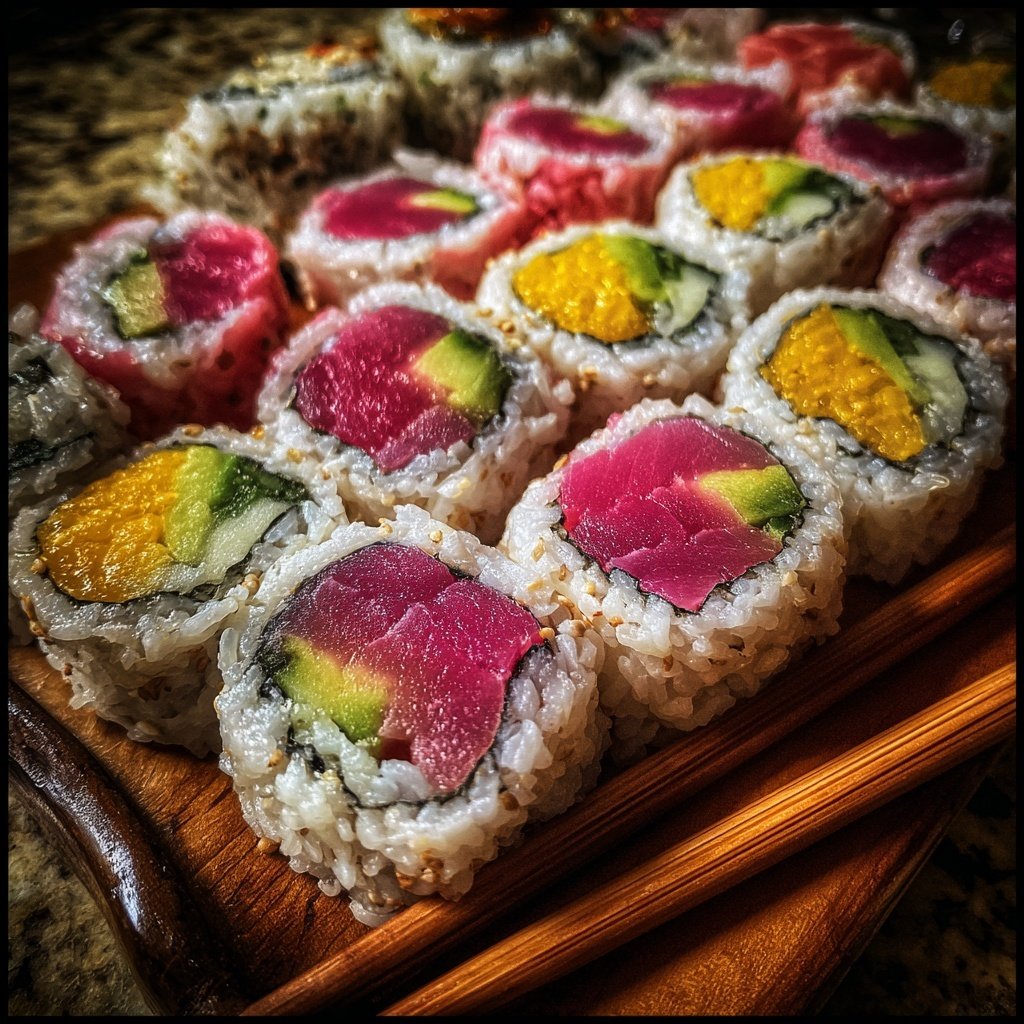
Global Japanese Sushi Rolls
Created by: The Chefisabellacooks Team
Recipe Type: Italian Dish
Skill Level: Intermediate
Final Quantity: 4 rolls
What You'll Need
Sushi Rice
- 2 cups sushi rice
- 2 ½ cups water
- 3 tablespoons rice vinegar
- 2 tablespoons sugar
- 1 teaspoon salt
Fillings
- ½ lb sushi-grade fish (like salmon or tuna)
- 1 cucumber, julienned
- 1 avocado, sliced
- 1 carrot, julienned
- Nori sheets (seaweed)
To Serve
- Soy sauce
- Wasabi
- Pickled ginger
How-To Steps
Rinse the sushi rice under cold water until the water runs clear. Then, combine with water in a pot, bring to a boil, then reduce heat and simmer for 20 minutes. Once cooked, let it cool slightly before mixing in rice vinegar, sugar, and salt.
Place a bamboo mat on a flat surface and lay a nori sheet shiny side down. Wet your hands to prevent sticking and take a handful of sushi rice, spreading it evenly over the nori, leaving about an inch at the top. Arrange your desired fillings in the middle.
Start rolling the mat away from you, pulling the roll tightly as you go. Use your fingers to hold the filling in place until you reach the edge of the nori. Wet the edge of the nori to seal it.
Using a sharp, wet knife, cut the sushi roll into bite-sized pieces. Wipe the knife between cuts for clean edges.
Plate your delicious sushi rolls and serve with soy sauce, wasabi, and pickled ginger.
Extra Tips
- Don’t be afraid to explore different fillings and styles! You can create vegetarian rolls or even add cream cheese for a different flavor profile. For an additional kick, consider adding sriracha to your mayonnaise for a spicy drizzle on top.
Nutritional Breakdown (Per Serving)
- Calories: 300 kcal
- Total Fat: 7g
- Saturated Fat: 1g
- Cholesterol: 20mg
- Sodium: 60mg
- Total Carbohydrates: 51g
- Dietary Fiber: 3g
- Sugars: 1g
- Protein: 9g